Indigenous Peoples’ Day 2026
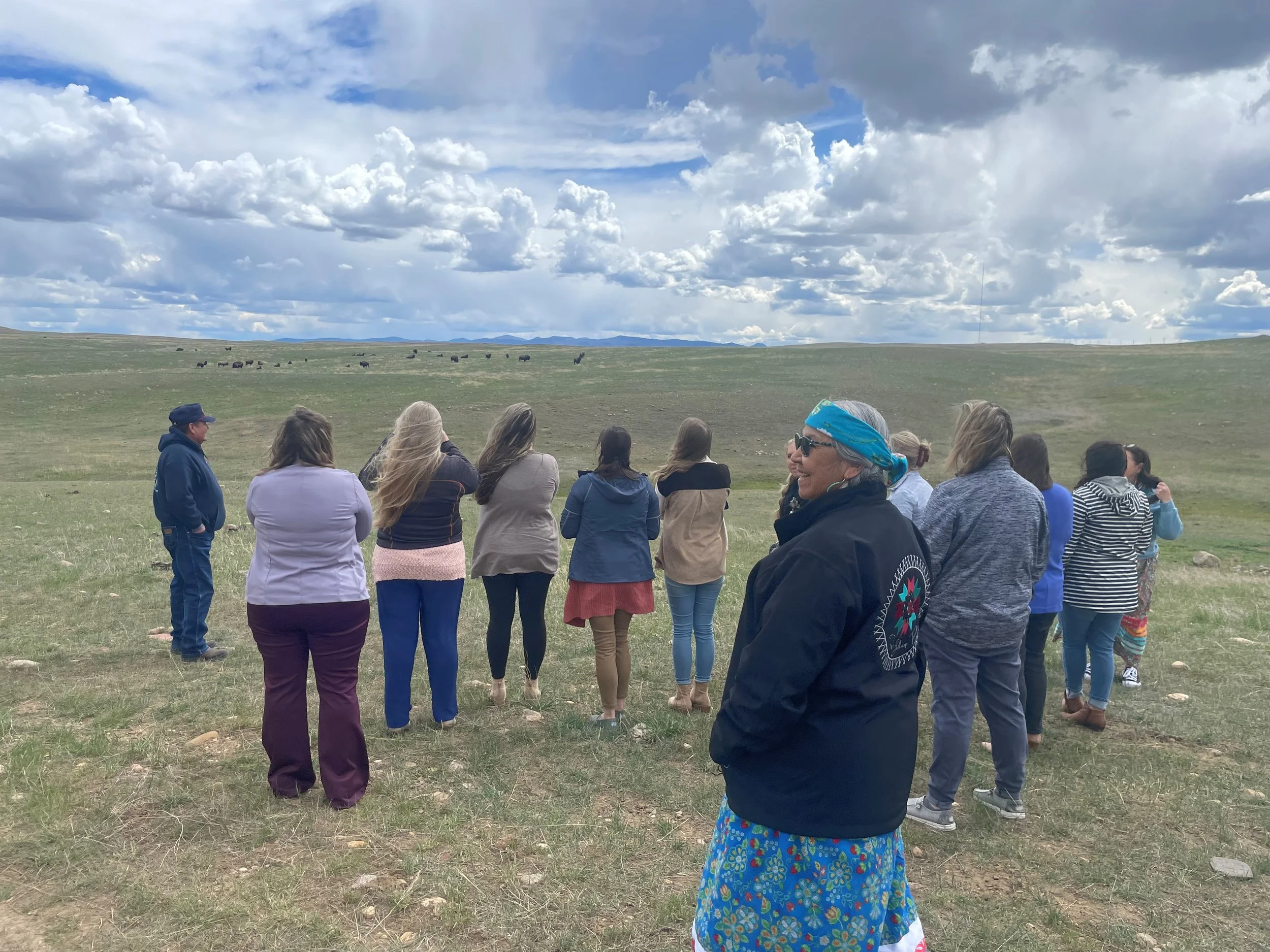
Nakoda Elder Renita LongKnife shares how the Land, the return of the Buffalo to the Land, and the health of our community are all connected. Labor & Delivery Nurses and Maternal Child Health Program staff from surrounding communities that provide prenatal care to Fort Belknap families came to visit the reservation and meet with local programs. Visits like this one move beyond acknowledgement: they let providers see firsthand the strength of our community and the care our people have for one another. Fort Belknap Indian Community Buffalo Pasture 2024
Happy Indigenous Peoples’ Day! As Indigenous Peoples’ Day approaches, we are reflecting on our participation in Montana Nonprofit Association’s Land Acknowledgement during their conference in Helena. They moved beyond acknowledgement and chose Berry Medicine as the Indigenous-led nonprofit to support through a monetary donation. Stemming from this experience, we invite you to reflect on what it means to acknowledge the Land and to turn that acknowledgement into action. Learning about the Indigenous Peoples and history of the Land where you live is an important step toward supporting Indigenous-led work.
What does it mean to acknowledge the Land?
If we only name the Tribes who were here before settler intrusion, we leave out an important part of the story. We create space for people to skip over or make assumptions about how a place became a school, a homestead, a city, or a state. We can talk generally about Manifest Destiny, or the idea of “taming the West” and say that Federal Indian Policies made it legal to steal land from Tribal Nations. But are we actually taking the time to understand the specifics of what that actually means?
Meaningful land acknowledgements require us to understand the specific history and cultures of the places where we live.
Berry Medicine serves Tribal Communities across what is now Montana, including seven reservations and twelve distinct Tribal Nations. Our office is in Helena, the capital of Montana. Located near the Big River (Missouri River), this region served as important hunting grounds and a travel corridor for numerous Tribal Nations, including the Aaniiih, Apsáalooke, Pikuni, Séliš, and Shoshone-Bannock Peoples.
While many Western societies viewed Land as a resource to own, divide, develop, and profit from, an Indigenous perspective views the Land as a relative, not property. This relationship was grounded in reciprocity, stewardship, and communal responsibility. Individual ownership was a foreign concept for the Tribes here as caring for the Land was often a communal responsibility.
For generations, these Nations maintained connections to this place. That changed dramatically with the arrival of settlers and the discovery of gold in the 1860s. As mining settlements expanded and land became privatized, Indigenous Peoples were forcibly removed from places where they hunted, gathered medicines, held ceremonies, or traveled through.
Federal policies further disrupted Indigenous lifeways through forced removal, allotment, boarding schools, and other efforts designed to assimilate Indigenous Peoples and destroy Indigenous cultures, languages, and ways of knowing. These policies were intended to separate Indigenous Peoples from their communities, their cultures, and their relationship with the Land.
Yet Indigenous Peoples are still here.
Despite the attempts to erase Indigenous Peoples and our lifeways, our cultures, languages, knowledge systems, and relationships with the Land endure because our ancestors fought to ensure future generations would survive. Today, Tribal Nations continue to revitalize cultural practices and Indigenous languages in an effort to build healthier futures for the next generations.
Learning the specific history of the place where you live helps us better understand both the harms Indigenous Peoples have endured and the resilience that continues today. The effects of war, displacement, cultural genocide, and familial separation are not confined to the past. These atrocities continue to shape the health and wellbeing of Indigenous families and communities.
At Berry Medicine, we understand that the health of Native Families cannot be separated from the history of the Land and the destructive policies used to take it. We work to restore cultural knowledge and support community-driven solutions grounded in Indigenous values and ways of knowing so that our communities can heal. This is how we strengthen Native Birthing Families and create environments where our babies are born into thriving communities, protected by the strengths of their culture.
Learning this history is not about assigning guilt. It is about understanding how we got here and accepting our shared responsibility for creating a more equitable future. When we know the history of the places we live, we can find deeper understanding, and be better prepared to support the Indigenous Peoples who call those places home.
Move Beyond Acknowledgement. Take Action.
Knowledge matters, but knowledge alone does not create change. Acknowledgement cannot undo displacement, assimilation, or the ongoing inequities Indigenous communities face. Allyship asks us to turn what we learn into sustained, meaningful action.
One powerful way to act is by investing in Indigenous-led solutions. Indigenous communities know our strengths, understand our needs, and carry generations of knowledge about how to care for our people. When Indigenous organizations are trusted, supported, and resourced, communities can build lasting change on their own terms.
However, Indigenous-led work remains significantly underfunded. Today, less than 0.5% of philanthropic dollars reach Native communities, despite persistent health and economic inequities. We deserve better.
At Berry Medicine Native BirthWork Initiatives, we are working to strengthen the health and wellbeing of Native Birthing Families by restoring Indigenous cultural practices related to pregnancy, birth, postpartum, and early parenting. We believe the solutions to the challenges facing our communities already exist within our communities. They simply need to be supported and resourced.
We view allyship as action, not a title or a status earned once, but an ongoing practice of learning, listening, sharing power, centering Indigenous voices, and investing in Indigenous leadership. Move beyond acknowledgement by learning the specific history of the Land where you live, knowing and supporting the Tribal Nations connected to it, centering Indigenous voices, and sharing your resources, influence, and power with Indigenous Peoples.
Support Berry Medicine Today
Together, we can honor Indigenous Peoples not only with our words, but by directing resources to Indigenous-led work and standing behind the solutions our communities are already creating.
This Indigenous Peoples’ Day, practice allyship through action. Make a gift to Berry Medicine to strengthen Native Birthing Families, revitalize Indigenous BirthWork, and help ensure Indigenous communities have the resources to thrive for generations to come.
Give to Berry Medicine Today
About the Author
Dr. Amy Stiffarm (Aaniiih, Chippewa Cree, and Blackfeet) is the Founding Executive Director of Berry Medicine Native BirthWork Initiatives. For more than 12 years, she has worked in Indigenous maternal health through systems change, advocacy, and research, working to strengthen the health and wellbeing of Native Birthing Families. She holds a PhD in Indigenous Health from the University of North Dakota, where her dissertation focused on mental health for Indigenous Birth Givers.